


This piece could not have happened at a more silly time. I am, as I write this, sitting with my right arm in a sling.
To make this explanation short, I was at my jiu jitsu class and while in full mount with a white belt I got swept and at some point in that process my hand got caught and bent at and angle and..well..
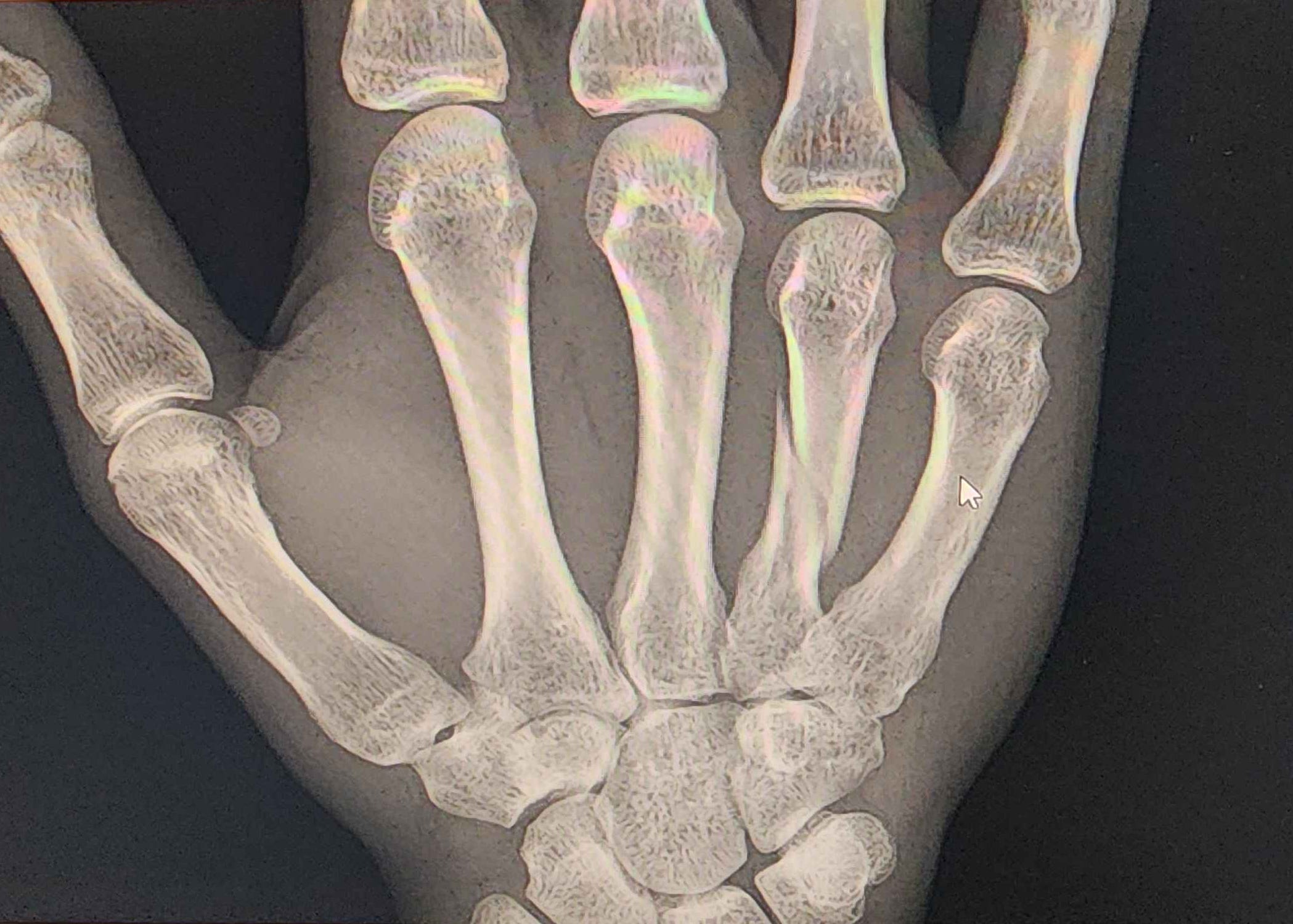
Yeah.
The reason this is rather silly isn’t because of how it happened. I was actually planning to talk about safety education, and now find myself as a suitable example.
So, lets take this opportunity to talk Safety Education in the sport now that I have a decent catalyst to do so. You can think of this post as a continuation of the Duty of Care piece from before.
Despite existing as a sport for roughly 100 years now, one consistent thing has been necessary since day one: safety education.
You may be thinking “well…is it? isn’t that on each person individually? I mean, we are doing a martial art that focuses on…well…injuring your opponent, right?”
But here’s the thing, when people get injured in jiu jitsu it usually isn’t because they’ve discovered some previously unheard of law of physics. The majority of injuries happen because somebody didn’t know, or wasn’t aware of, something.
That may sound obvious, but let’s stew on this for a minute.
Typically, based both on my own anecdotal experience as well as the experience of other coaches and even contemporary research, a white belt doesn’t enter the gym knowing how to do a fall without injuring themselves. They don’t know the difference between “this is an uncomfortable position” and “my elbow is three seconds away from being a case study in an orthopedic journal.”
This is not a character flaw of the individual.
It’s just the reality of them being a beginner.
This can be seen in research on concussions within the sport. A 2022 study examining concussion incidence among practitioners in Brazil found that the less experienced a student was, particularly white belts, the higher frequency of reported concussions occurred compared to more experienced practitioners. Nearly half of first-time concussion cases in the sample occurred amongst white belts. That is incredibly high. The researchers did not present this as some inevitable reality of being a beginner. Instead, they specifically recommended training methodologies focused at reducing concussion risk amongst beginners. Put more simply, the researchers saw this as an educational problem that could be rectified rather than one based around individual athletic ability.
In other words, the educators were not putting emphasis on safety as much as they ought to have. Which, ultimately, is a responsibility of an educator in all learning environments as I’ve discussed in my previous discussion on Duty of Care.
And frankly, the conclusion the research team is not surprising. Entering a jiu jitsu class for the first time a student is bombarded with far more things that they need to learn before they can even begin to safely participate in the sport.
I am not referring to specific jiu jitsu techniques, but more so safety oriented practices such as what is or is not a safe position for a partner (for example, knee reaps), how to breakfall, how much intensity you should be exerting while rolling, when to tap, when not to “muscle through” something, how to listen to your body and slow down your training (or take a break) to avoid injury, and how to not accidentally injure your partner.
The thing is, many gyms treat these pieces of knowledge as things a new student will “just absorb through osmosis”, which is true. They will definitely absorb it. Eventually. The problem is, everyone’s rate to absorb concepts like these vary heavily.
A kid will learn to not touch a red hot stove through this process. Except we typically don’t let them touch the stove first to learn that its a bad idea.
Which is precisely what coaches are there to do. To teach these concepts not purely through “mat time” but to also give clear and direct instruction on what is or is not the best way to do things to avoid harming yourself or your training partners.
Coaches have far more influence over safety than they sometimes even realize.
If a coach is consistently praising people for toughing it out and never giving up while also never addressing when to tap, their students will notice and pick up on this implied focus.
However, if a coach routinely stops sparring rounds to check on someone who has gotten injured, reminds students that tapping early is fine and normal, and openly discusses risk management as both the tori (person doing the technique) and the uke (recipient), students will likewise notice this and pick up on these practices.
Typically in education we call this the “Hidden Curriculum”, which is the unwritten, unofficial, and sometimes unintended learning outcomes that students will pick up from their lesson which is not part of the actual formal curriculum. More often than not, this aspect of a curriculum will play a role in shaping students’ experiences and behavior in the learning environment.
You may even call it the “gym culture.”
And more often than not, its not taught directly. It’s demonstrated, noticed, and replicated by the students. Humans have a knack for adapting themselves to whatever behaviors appear to be valued in a learning space.
This is why safety education should not be viewed as a separate subject from technical instruction. In reality, they are often the same thing.
Lessons shouldn’t focus purely on the specific technique’s outcome. Instead equal effort should be placed on underlying principles such as balance, leverage, posture, structure, and efficient force application.
However, jiu jitsu gyms are, notably, prone to defaulting their lesson plans to being ones where the teacher tosses out a few techniques for everyone to quickly memorize partially before doing a few rounds of rolling to close out the class. Sometimes this is a 50/50 split in the class period.
Contrasting this approach to judo which more often than not heavily emphasizes underlying concepts in more detail and through far more repetitions during practice (uchikomi), and you can see where jiu jitsu begins to diverge from the established pedagogy that judo formed for itself. A system that was readily available to utilize, but has over time been ignored.
Now, this isn’t to say judo is safer than jiu jitsu. It is saying there are clear pedagogical reasons for focusing on understanding the core principles for a technique. All of which has implications for safety.
A practitioner who understands leverage is less likely to compensate with reckless force.
A practitioner who understands posture is less likely to place themselves in vulnerable positions.
A practitioner who understands balance is less likely to be launched into orbit during a poorly executed takedown attempt.
In short, good mechanics are not merely effective they are often safer for both the tori and uke.
This idea is hardly unique to jiu jitsu. Across education more broadly, understanding principles generally transfers better than memorizing isolated procedures. Students taught why something works can adapt when circumstances change. Students taught only what to do often struggle once the situation looks slightly different.
The same principle applies on the mats.
Which brings us to concussions, perhaps the clearest example of an educational gap between experience levels.
A U.S.-based study examining concussion prevalence in jiu jitsu found that approximately one quarter of practitioners reported suffering a concussion while training (Spano et al., 2019). Among the findings, the average return time to training was found to be three days. Which is not, based on my own experience with a mild Grade 1 concussion from American Football in High School, an ideal time frame. At the time, I was told at least a month. Remember, a concussion is a bruise on your brain (more or less). Why would you risk further injury? What’s even more concerning from this study is that roughly one third of participants reported returning to training on the same day. Which, you know, don’t ever do after a head injury. Like, ever. Seriously.
Understandably, the study concluded that there was a need for increased education regarding concussion symptoms and return-to-sport guidelines among both coaches and practitioners.
This echoes the study in Brazil. White and blue belts not only experienced concussions at disproportionately high rates, but were also the least likely to seek medical care afterwards. They were simultaneously the group most likely to return to training within twenty-four hours. The researchers specifically recommended educational interventions aimed at both beginners and coaches.
What makes these findings particularly interesting is that they mirror observations from research on judo.
Reviews examining head injuries among judokas have repeatedly highlighted the importance of breakfall training and injury prevention education (Lockhart et al., 2022). Again, experience is demonstrated to reduce risk. So, again, education appears to matter significantly to prevent injuries to yourself or your training partner.
Many people can recognize an off-balancing opportunity from a variety of positions.
Far fewer can recognize the inherent risk some movements can cause to themselves or their training partner.
We have become exceptionally sophisticated at transmitting competitive knowledge and comparatively unsophisticated at transmitting safety and health knowledge.
I don’t think there’s a realistic world where jiu jitsu becomes 100% injury-free. That’s just an unrealistic expectation.
However, there is a significant difference between unavoidable injuries and preventable injuries.
Research suggests that experience reduces risk, which echoes my own experience. However, the question we should be asking is whether we should allow for students to take months or even years to develop the core knowledge needed to ensure they don’t injury themselves or their partners.
Ideally, for both my own sake as an educator but also for the sake of my ailing hand, I don’t think it should be taking that long.
It’s far better for a white belt to be explicitly taught why they don’t need to go 100% intensity during a practice round at the end of a class than for them to sort of guess and figure it out eventually, possibly halfway to their blue belt.
I would like to think my own current circumstance qualifies me in making that recommendation.
Papers Cited
Lockhart, R., Błach, W., Angioi, M., Ambroży, T., Rydzik, Ł., & Malliaropoulos, N. (2022). A systematic review on the biomechanics of breakfall technique (Ukemi) in relation to injury in judo within the adult judoka population. International Journal of Environmental Research and Public Health, 19(7), 4259. https://doi.org/10.3390/ijerph19074259
Santos, M.A.F., Da Costa, L.O., Antonietto, D., Da Silva, F.N.O., Fernandes, A.M., Teixeira, F., Sobarzo, D., Brito, C., Miarka, B. (2022). Lower experience increases concussion susceptibility in Brazilian jiu-jitsu practitioners. Motricidade, 18(2), 145-150. https://doi.org/10.6063/motricidade.25224
Spano, M., Risucci, D. A., Etienne, M., & Petersen, K. H. (2019). Epidemiology of sports related concussion in Brazilian jiu-jitsu: A Cross-Sectional Study. Sports, 7(2), 53. https://doi.org/10.3390/sports7020053