


Dark clouds are gathering on the horizon, a storm is coming for the UFC: there will be an in-cage death in the near future. Do I think it’s coming this year? No, and probably not next year, either. But there are several factors that have combined to make an unfortunate outcome exceedingly likely.
There have been plenty of moments in the cage, from UFC 1 to whatever last week’s assortment of flailing no-names at the Apex, that have looked to be on the verge of disaster. Devastating knockouts that have left the victim seizing on the ground (Emmett vs Mitchell), brutal chokes that have seen the vanquished laying unconscious far too long (Grasso vs Barber), prolonged, uncomfortable beatings that should have been stopped, either by referee or a caring and empathetic corner, far sooner than they were (O’Malley vs Moutinho), or even the rare, one-in-a-million freak accidents where someone simply stops moving for no discernible reason (Rosas vs Barcelos), leaving the viewers to fear a heart attack or some kind of neurological breakdown has occurred. Luckily, while shocking, these moments have managed to skirt danger, so far.
To be clear, I’m not clutching any pearls or wringing my hands, begging for UFC or the sport as a whole to be abolished. Despite what a certain subset of the fanbase (Or president of a promotion) claims, just because I have concerns or criticisms, doesn’t mean I still don’t like MMA and enjoy watching it. I’m simply acknowledging a series of fundamental changes that have compromised fighter safety. I would love for things to change and improve, but it feels like UFC is hard committed to this path, so change won’t happen until after it is too late.
Since I started watching MMA, the sport was always touted as being safer than boxing, with a laundry list of reasons the danger was mitigated:
Fighters can target strikes below the waist, reducing the potential amount of head trauma inflicted.
Submissions are a viable path to victory, and other than the dreaded Head Vise as perfected by Kona Crush, most holds don’t cause lasting brain damage.
Elbows are legal, and since “they only cause cuts” (Citation: Diaz, N and Diaz, N), a cut stoppage potentially limits brain trauma.
There’s also the talking point that a single-shot KO is somehow better than a fighter taking a prolonged onslaught of punches. Thus, MMA gloves, which are smaller than boxing gloves, offer reduced surface area for blocking, so one-punch knockouts are more likely. I should note that this particular theory was developed prior to the invention of Max Holloway, and might need to be re-tested.
MMA fights also tend to be shorter, limiting the amount of time available for either fighter to absorb punishment. Fifteen, to a possible twenty-five minutes in the cage, opposed to a low end of twenty-four, up to thirty-six minutes in the ring is a fairly sizable discrepancy when it comes to trauma.
Despite all of these potential safety guardrails, UFC has specifically blown through these defensive bulwarks in its effort to sprint headfirst towards virality. The intention was not to throw fighter safety aside, but that is a byproduct of seeking the next big moment, which is all UFC cares about at this point. Afterall, they are no longer in the business of promoting fights or fighters, but simply exist as a platform for social media clips, whether that’s a devastating knockout, or podcast racism.
A massive factor in the specter of death looming over the UFC is how bad so many of the fighters currently are. The roster is bloated with signees from Dana White’s Contender Series, most of whom aren’t even 10 fights into their career, and have never faced anything other than an absolute jobber on their path to the UFC. There are fighters who have padded records off boxcar hoboes, and when your opponent is too stricken with rickets to pose a threat, there’s no need to develop defensive fundamentals. Now we have alleged UFC-level fighters who have no clue how to protect themselves in the cage because they’ve only ever had to throw big, looping punches and knock out an opponent in under 90 seconds.
It’s kind of resembling a video game, where every division outside of the top 15 is a carbon copy of the same created fighter who put what limited stat points you start out with into Punch Power and let everything else be damned, so long as you land first. Head movement, footwork, handfighting, all of it goes out the window, eschewed for haymakers and overhands.
This then feeds into another big issue in the UFC, grossly negligent booking. Most cards these days feature several bouts with hilariously skewed betting lines, often with four digit numbers on either side of the favorite and underdog line. Now, obviously, betting lines are not the end all, be all of fight outcomes, but Vegas odds that wide tend to reveal a mentality that the underdog has an extremely narrow chance for victory. This is usually because they are an incredibly inferior opponent, who is more than likely going to get easily knocked out.
These two items go hand-in-hand with each other, which is that UFC’s in-house preferred style is Swang n Bang. The emphasis runs from the top down, with Dana White openly disparaging fighters who don’t throw with wild abandon, with booking following a similar agenda to reward brawlers and punish cautious grapplers. Commentators frequently ask if positional control is enough to win a round, while judges echo similar sentiment the rare occasions they are asked their reasoning for scores. Even referees have talked about takedowns with limited striking or submission attempts being acceptable for one round, but grounds for revoking position and initiating a standup should it happen in a subsequent round.
So the fighters are less defensively capable, grappling is punished to the point of it becoming an evolutionary afterthought, like the appendix, and matchmaking sets up knockout artists against warm bodies for the hope of a Cool Moment. Is one bad knockout really that dangerous? Well, yes, any strike has the potential for something terrible to happen. But it’s not just one fighter taking one knockout in a vacuum.
The final factor I’ve noticed is that athletic commissions seem to no longer have any sort of regulatory teeth to curtail UFC’s more egregious actions. It used to be that any fighter would be hit with at minimum a 30-day no contact suspension following a fight, to be waived with an appropriate doctor’s clearance, and a fighter suffering a knockout would have a more ironclad 90-day no contact suspension. This was meant to prevent fighters from accumulating too much brain damage in a short amount of time. Currently, fighters regularly get knocked out and are back in the cage to compete inside of 60 days, obliterating any chance for recovery.
Hell, sometimes a fight would not be allowed to go forward if the discrepancy in skill levels was too vast. Imagine that, someone with authority to stop an obvious, egregious mismatch in the name of fighter safety.
Additionally, we recently discovered that Edson Barboza competed the last few years of his career without vision in one eye. When Michael Bisping did the same, he utilized a series of secret codes with his trainer and memorized eye exam charts in order to dupe the medical testing. For Barboza, he simply told the licensing doctors his vision was compromised but he wanted to fight anyway, and he was allowed to do this. Athletic commissions are supposed to be a last line of defense to protect fighters from their own worst interests, but now they simply rubber stamp whatever the UFC wants to happen.
The fix isn’t too difficult to enumerate, but putting it in practice is another thing. Most of it hinges on UFC actually giving enough of a shit to protect fighters versus making more money. Fighters need time to develop their skills and can’t be rushed beyond their level. Nobody gains anything from beating up jobbers for a few years and then rocketed into high level competition. Matchmaking that conceivably benefits either side winning, as previously seen under Joe Silva’s tyrannical leadership, would help mitigate some potential danger I’ve laid out. Allowing, if not encouraging actual mixing of martial arts instead of fervently pushing “punch go boop” stylists to the detriment of everything else might see some nuance develop inside the cage. And finally, athletic commissions having any kind of pushback against some of the more egregious practices, or even just enforcing regulations I assume are still on the books, would be nice to see again. I understand UFC holds a near-monopoly on MMA, so states that want to host UFC events tend to bend over backwards to their whims, including pushing aside anything that would potentially keep the company from returning. But government agencies should provide pushback against massive corporate entities. Well, as I typed that last sentence I realize how foolish I sound.
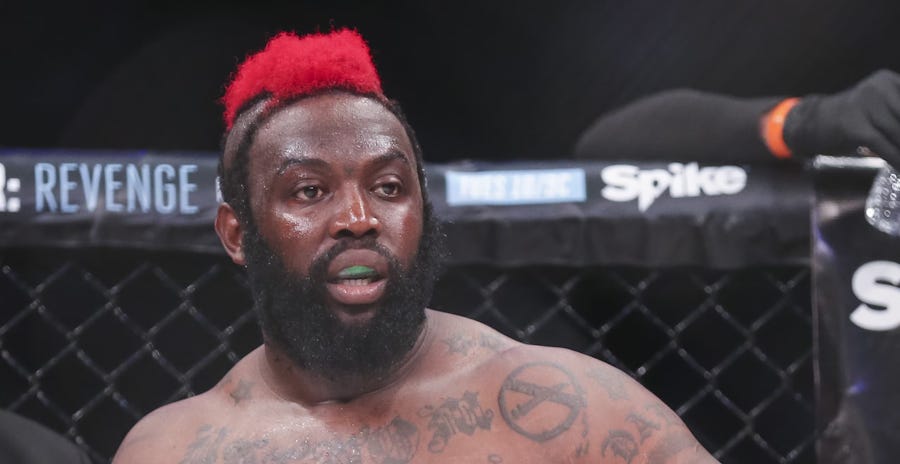
At the end of the day, I’ve seen plenty of gruesome, shocking, and terrifying moments in MMA. Soccer kicks and head stomps in Japan, people twenty years past their prime still competing (Shamrock vs Gracie in Bellator, Ortiz vs Liddell 3), and even out of shape fighters temporarily dying after the fight (Kimbo vs DaDa5000). Yet the vast majority of those moments took place outside the octagonal confines of the UFC, which has long presented itself as the premier organization in mixed martial arts. Of course there’s horrible things going on in Bellator or Strikeforce or Cage Warriors or Xplode MMA or Duke Phillips’ House of Fisticuffs and Pony Rides, those low-rent, two-bit organizations have to rely on shock factor and utilize random people from the crowd to get knocked out to draw fans. But the UFC has legit talent, with the best in the world fighting. They would surely never have to rely on those cheap tactics to fill out cards.
I just hope that whenever the unfortunate incident does occur, nobody in the greater MMA fanbase allows whatever PR mouthpiece off by wringing their hands and crying crocodile tears that there was no way to see any of this coming.